Austrian German vs Standard German: Dialect, Vocabulary, and Key Differences
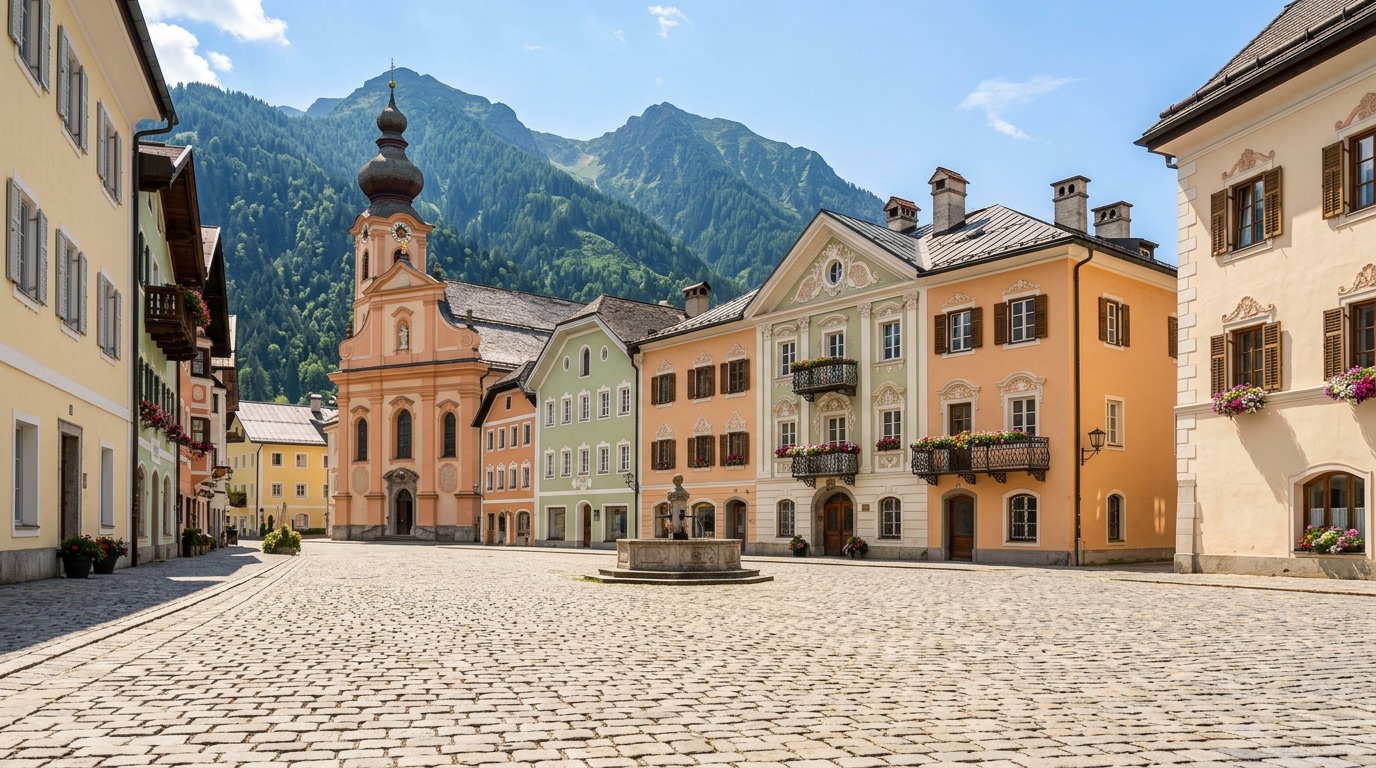
If you've learned German from a textbook or app, you learned Standard German (Hochdeutsch) — the form used in German media, education, and formal writing across Germany, Austria, and Switzerland. But step into a Viennese café, visit Salzburg, or watch Austrian TV, and you'll encounter something noticeably different: Austrian German.
Austrian German isn't a foreign language. It's the same language — but with regional vocabulary, distinct pronunciation, and in casual speech, strong dialects that can challenge even fluent speakers of Standard German. Here's what to expect.
Is Austrian German a dialect or a standard?
Austrian German sits in an interesting position. There is a recognised Austrian Standard German (Österreichisches Standarddeutsch) — an official written standard used in Austrian government, education, and formal contexts. This is legitimate, codified, and different in some documented ways from German Standard German.
Below the standard sits a spectrum of regional dialects — Viennese, Tyrolean, Styrian, Carinthian, Vorarlberg (which blends into Alemannic German / Swiss German territory). These dialects are far more distinct and can be genuinely unintelligible to speakers of Standard German unfamiliar with Austrian speech patterns.
What most people mean by "Austrian German" is the variety spoken in everyday Austrian life — a mixture of regional standard and dialect influence. This is what you'll hear in conversations, on Austrian TV, and in Austrian literature.
Vocabulary differences — the most noticeable gap
Vocabulary is where Austrian German diverges most clearly from German German. Many everyday words are simply different — same meaning, completely different word.
| English | German German | Austrian German |
|---|---|---|
| January | Januar | Jänner |
| butcher | Metzger / Fleischer | Fleischhauer / Selcher |
| potato | Kartoffel | Erdapfel |
| tomato | Tomate | Paradeiser |
| sprouts / Brussels sprouts | Rosenkohl | Kohlsprossen |
| cream | Sahne | Schlagobers / Obers |
| the car bonnet (hood) | Motorhaube | Kühlerhaube |
| the pavement / sidewalk | Bürgersteig / Gehweg | Gehsteig / Trottoir |
| ground floor | Erdgeschoss | Parterre |
| first floor | erstes Obergeschoss | Hochparterre / erste Etage |
| elevator | Aufzug / Fahrstuhl | Lift |
| the checkout (at a shop) | Kasse | Kassa |
| goodbye (casual) | Tschüss | Servus / Baba |
| hello (casual) | Hallo / Hi | Servus / Grüß Gott |
Note: Grüß Gott ("God greet you") is the standard formal greeting in Austria and Bavaria — you'll hear it constantly in Austria instead of Guten Tag. Servus is informal and can mean both hello and goodbye.
Grammar differences
Austrian Standard German has a few documented grammatical differences from German Standard German — most are minor, but some are notable:
- Perfect tense preference: Austrians use the Perfekt tense even more consistently than Germans for past events — including cases where Germans would use Präteritum. Saying ich war (I was) in speech is more common in northern Germany; Austrians say ich bin gewesen.
- Diminutive forms: Austrian uses -erl as a diminutive suffix where German uses -chen or -lein. Haserl (little rabbit) vs Häschen.
- Kassa vs Kasse: Austrian Standard German retains some older noun forms — Kassa (cash desk) rather than German Kasse.
- Verb conjugation in dialects: Viennese dialect uses ich hab rather than ich habe, and many strong verbs have different forms. But this is dialect, not standard Austrian.
Pronunciation differences
Austrian German sounds different to German German in several consistent ways:
- Softer, more sing-song intonation — Austrian speech has a distinctive melodic quality compared to northern German flatness
- -ig endings: German German often pronounces -ig as "-ich" (like fertig → "fertic"). Austrian German pronounces it as "-ig" — a harder final sound
- Vowel length: Austrian vowels tend to be longer and more open than equivalent sounds in Standard German
- S before consonants: Austrian German often uses a softer S where northern German uses a harder one
In Viennese dialect specifically, the differences become much more pronounced: vowels shift (e → a in some contexts), consonants soften, and the prosody (rhythm) changes dramatically.
Swiss German — the third major variety
Switzerland has its own German variety — Swiss Standard German (Schweizerhochdeutsch) and Swiss German dialects (Schweizerdeutsch). Swiss German dialects are far more divergent than Austrian German and are genuinely unintelligible to most German and Austrian speakers without training. Even the written Standard German used in Switzerland has differences (no ß, uses ss instead; different vocabulary; French loanwords).
If you're planning to visit or work in Switzerland, be aware that everyday spoken communication will be in dialect — Swiss German, not Hochdeutsch. Most Swiss people understand and speak Standard German, but conversations among Swiss people almost always happen in dialect.
What does this mean for learners?
If you learn Standard German (which is what all courses teach), you will:
- Be understood everywhere in Germany, Austria, and Switzerland — people in formal and professional contexts use the standard
- Understand Austrian Standard German without much difficulty — the differences are noticeable but not a barrier
- Struggle with strong Austrian, Bavarian, and Swiss German dialects — as all Standard German speakers do, including Germans themselves
The good news: Austrians in professional and educational contexts use Standard German. Vienna has a well-developed service economy where English and Standard German both work fine. The dialect situation only becomes challenging if you're living in rural Austria or encountering very colloquial speech — in which case you adapt over time, the same way any German speaker would.
Start with Standard German. Regional variation comes naturally with exposure once you have a foundation.
Learn Standard German — the foundation for everything
DeutschSpeak teaches Standard German from A1 to C1 — the variety that works across Germany, Austria, and Switzerland. Free to download today.