Essential German Travel Phrases: 60+ Sentences to Know Before You Go
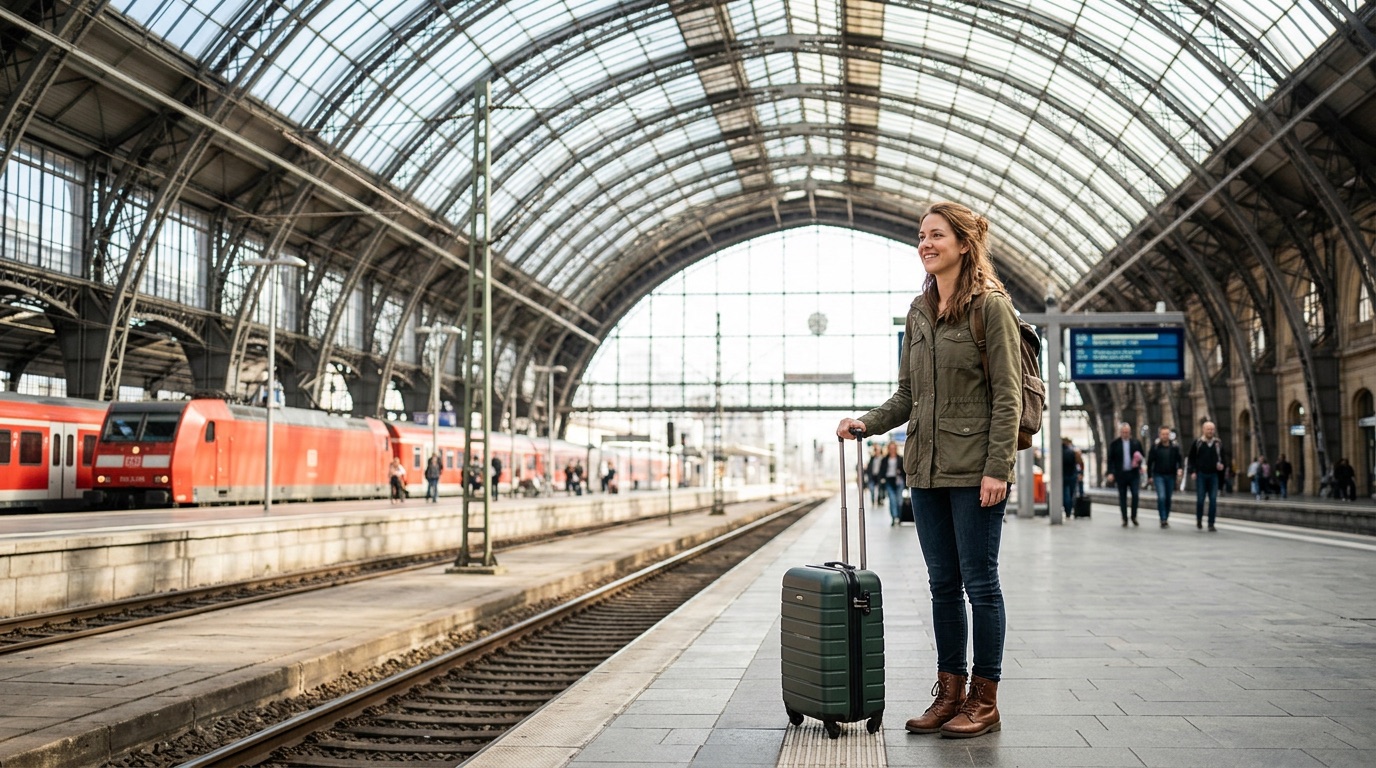
You don't need to be fluent to travel Germany, Austria, or Switzerland comfortably. But the difference between a tourist who knows zero German and one who knows 50 phrases is enormous — Germans respond differently, interactions feel less transactional, and you'll find yourself in conversations you never expected. This guide covers every situation you'll actually encounter.
The basics you need from day one
These are the phrases that should be automatic before you board the plane. They handle the majority of brief daily interactions — greetings, politeness, and acknowledging when you're lost.
| German | English | Pronunciation guide |
|---|---|---|
| Hallo / Guten Tag | Hello / Good day (formal) | HAH-lo / GOO-ten tahk |
| Guten Morgen | Good morning | GOO-ten MOR-gen |
| Guten Abend | Good evening | GOO-ten AH-bent |
| Auf Wiedersehen / Tschüss | Goodbye (formal / informal) | owf VEE-der-zayn / chus |
| Bitte | Please / You're welcome | BIT-uh |
| Danke / Danke schön | Thank you / Thank you very much | DAHN-kuh / DAHN-kuh shurn |
| Entschuldigung | Excuse me / Sorry | ent-SHUL-dee-gung |
| Ja / Nein | Yes / No | yah / nine |
| Sprechen Sie Englisch? | Do you speak English? | SHPREH-khen zee ENG-lish |
| Ich verstehe nicht. | I don't understand. | ikh fer-SHTAY-uh nikt |
| Können Sie bitte langsamer sprechen? | Can you please speak more slowly? | KUR-nen zee BIT-uh LAHNG-zah-mer SHPREH-khen |
| Wie bitte? | Pardon? / Come again? | vee BIT-uh |
Arriving and getting around
German cities have excellent public transport — knowing how to navigate it in German makes everything smoother.
| German | English |
|---|---|
| Wo ist ...? | Where is ...? |
| Wo ist der Bahnhof? | Where is the train station? |
| Wo ist die U-Bahn-Station? | Where is the metro station? |
| Wie komme ich zum Stadtzentrum? | How do I get to the city centre? |
| Eine Fahrkarte nach [Stadt], bitte. | One ticket to [city], please. |
| Einmal / Zweimal | One time / Two times (one/two tickets) |
| Einfach oder hin und zurück? | Single or return? |
| Wann fährt der nächste Zug nach ...? | When does the next train to ... depart? |
| Von welchem Gleis? | From which platform? |
| Ist dieser Platz frei? | Is this seat free? |
| Geradeaus / Links / Rechts | Straight ahead / Left / Right |
| Wie weit ist es zu Fuß? | How far is it on foot? |
At the hotel
Knowing hotel phrases means you can sort problems quickly rather than relying on the receptionist's English patience.
| German | English |
|---|---|
| Ich habe eine Reservierung. | I have a reservation. |
| Auf den Namen ... | Under the name ... |
| Haben Sie ein Zimmer frei? | Do you have a room available? |
| Ein Einzelzimmer / Doppelzimmer | A single room / double room |
| Wie viel kostet das Zimmer pro Nacht? | How much is the room per night? |
| Ist das Frühstück inbegriffen? | Is breakfast included? |
| Um wie viel Uhr ist der Check-out? | What time is check-out? |
| Kann ich den Schlüssel haben? | Can I have the key? |
| Es gibt ein Problem mit dem Zimmer. | There is a problem with the room. |
| Die Klimaanlage / Heizung funktioniert nicht. | The air conditioning / heating doesn't work. |
Restaurants and cafés
German food culture is wonderful — knowing these phrases helps you order confidently, handle dietary needs, and get the bill without waving for ten minutes.
| German | English |
|---|---|
| Einen Tisch für [Zahl] Personen, bitte. | A table for [number] people, please. |
| Haben Sie einen Tisch reserviert? | Do you have a reservation? |
| Die Speisekarte, bitte. | The menu, please. |
| Ich möchte ... bestellen. | I would like to order ... |
| Was empfehlen Sie? | What do you recommend? |
| Ich bin Vegetarier/Vegetarierin. | I am vegetarian (m/f). |
| Ich bin allergisch gegen ... | I am allergic to ... |
| Enthält das ...? | Does this contain ...? |
| Das war sehr lecker! | That was very delicious! |
| Die Rechnung, bitte. | The bill, please. |
| Zusammen oder getrennt? | Together or separate? (bill) |
| Stimmt so. | Keep the change. |
| Ein Wasser / Ein Bier, bitte. | A water / A beer, please. |
Shopping and paying
| German | English |
|---|---|
| Wie viel kostet das? | How much does this cost? |
| Haben Sie das in einer anderen Größe? | Do you have this in a different size? |
| Kann ich das anprobieren? | Can I try this on? |
| Ich nehme das. | I'll take this. |
| Mit Karte oder bar? | By card or cash? |
| Mit Karte, bitte. | By card, please. |
| Haben Sie eine Quittung? | Do you have a receipt? |
| Das ist zu teuer. | That's too expensive. |
| Wo ist die nächste Apotheke? | Where is the nearest pharmacy? |
Emergencies
Hope you never need these — but know them anyway.
- Hilfe! — Help!
- Rufen Sie die Polizei! — Call the police!
- Rufen Sie einen Krankenwagen! — Call an ambulance!
- Ich brauche einen Arzt. — I need a doctor.
- Ich habe meine Tasche verloren. — I've lost my bag.
- Mein Pass wurde gestohlen. — My passport was stolen.
- Wo ist das nächste Krankenhaus? — Where is the nearest hospital?
- Notruf: 110 (Polizei), 112 (Feuerwehr/Rettung) — Emergency: 110 (police), 112 (fire/rescue)
Useful phrases Germans appreciate
These small phrases signal that you're making an effort — they go a long way in earning goodwill from locals.
- Ich lerne Deutsch. — I'm learning German. (Use this and watch faces light up)
- Mein Deutsch ist nicht so gut. — My German isn't very good.
- Wie sagt man das auf Deutsch? — How do you say that in German?
- Entschuldigung, ich habe eine Frage. — Excuse me, I have a question.
- Prost! — Cheers! (at the beer garden — essential)
- Mahlzeit! — Enjoy your meal! (also used as a general midday greeting in offices)
Learn German travel phrases the fast way
DeutschSpeak covers all the vocabulary and phrases you'll need for travel — plus grammar so you can build new sentences on the fly. Free to download today.