How to Remember German Words (and Their Articles)
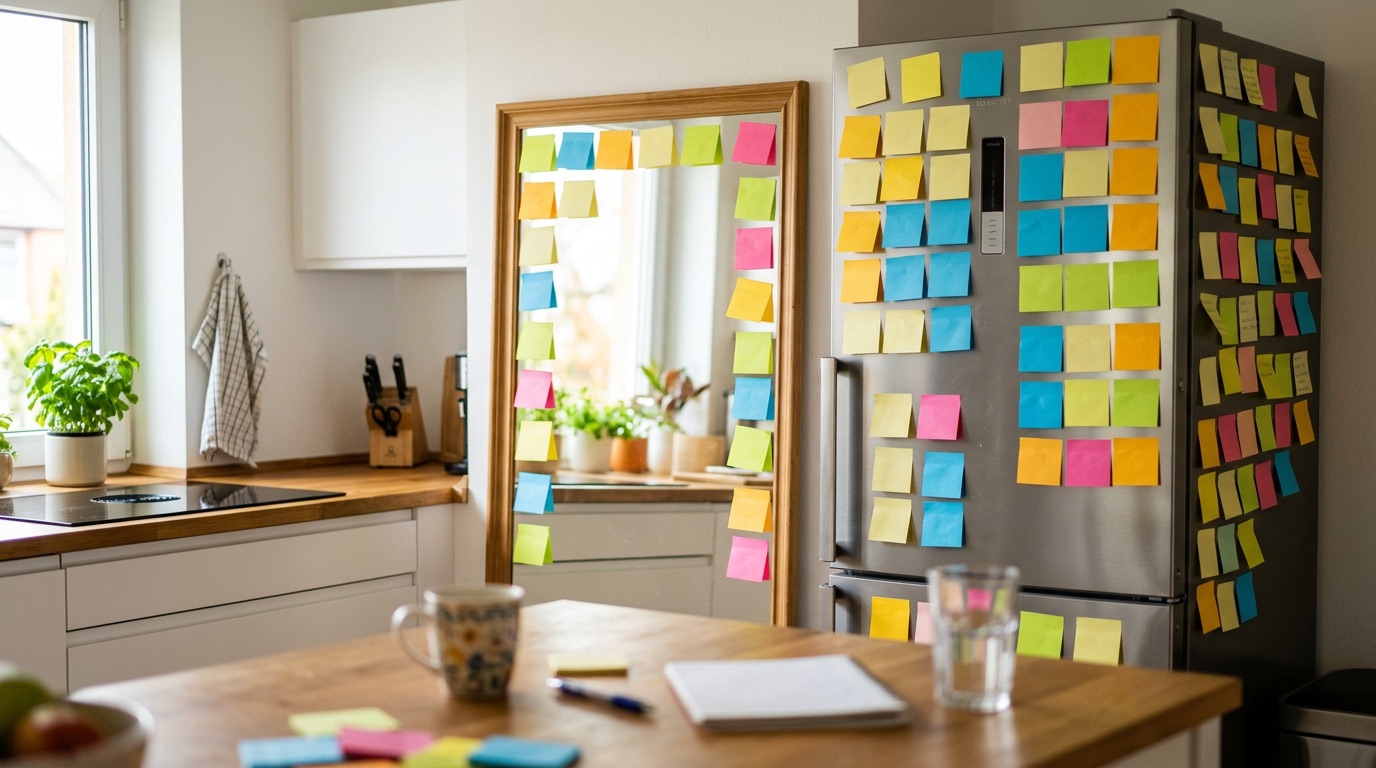
German's head start — and its hidden trap
German and English are cousins, so you start ahead: Haus, Hand, Wasser, Bruder, Sommer are almost free. The trap is that this easy start hides two things a bilingual list never shows — the article (der/die/das) and the false friends (Gift = poison, Rathaus = town hall, not a rat house).
So the method for German is not "learn the word" — it is "learn the word, its article, and whether it's secretly a false friend." Here are seven techniques that do that.
1. Learn every noun with its article
Never learn "Tisch"; learn "der Tisch." The gender is not optional trivia — it drives every case ending. Colour-coding helps: pick a colour for der, die and das and use it everywhere.
2. Learn words in context, not in isolation
A word in a sentence or a picture is remembered far better than a word alone — and context often reveals the gender and meaning at once.

Context is exactly what Picture Scenes give you — every word is learned in the room it belongs to, spoken with its article. bathroom · das Badezimmer
Explore Picture Scenes →3. Use spaced repetition
Review a word just before you would forget it; each review pushes the memory further out. It is the single most powerful evidence-based vocabulary technique. Any good app does it automatically.
4. Watch out for false friends
Keep a short list of the ones that bite: bekommen (to receive, not become), also (so/therefore, not also), Chef (boss, not cook). Learning them as a group inoculates you.
5. Exploit German's Lego words
German builds long words from small ones: Handschuh = hand-shoe = glove, Krankenhaus = sick-house = hospital. Learn the parts and the compounds come almost free — and they are wonderfully memorable.
6. Say it out loud
Producing a word — moving your mouth, including the article — encodes it more deeply than silent reading, and builds your speaking muscle at the same time.
7. Accept forgetting as part of it
You will forget words and mix up articles. Everyone does. Forgetting and re-learning is how memory hardens — it is part of the process, not a sign of failure. Keep the reviews coming and the words that matter will stay.
Let the app handle the review schedule
DeutschSpeak brings words back just before you forget them and shows each one with its article, in context. Free to start.
Frequently asked questions
What is the best way to memorise German vocabulary?
Learn each noun with its article, in context, and review it on a spacing schedule with active recall (say or write it from memory). The combination — article + context + spacing — is what makes German words and their gender stick.
How do I remember der, die, das?
Learn the article with the noun from day one, colour-code by gender, and see nouns repeatedly in the same scene so the article rides along with the picture. There are some pattern hints (e.g. most -ung and -heit words are die), but consistent exposure does the real work.
Why do I keep forgetting German words?
Usually because they were learned without their article, in isolation, and never reviewed. Attach each word to a picture and its gender, and review it a few times over spreading intervals, and retention improves sharply.