German Food & Grocery Vocabulary: Shop and Cook in German
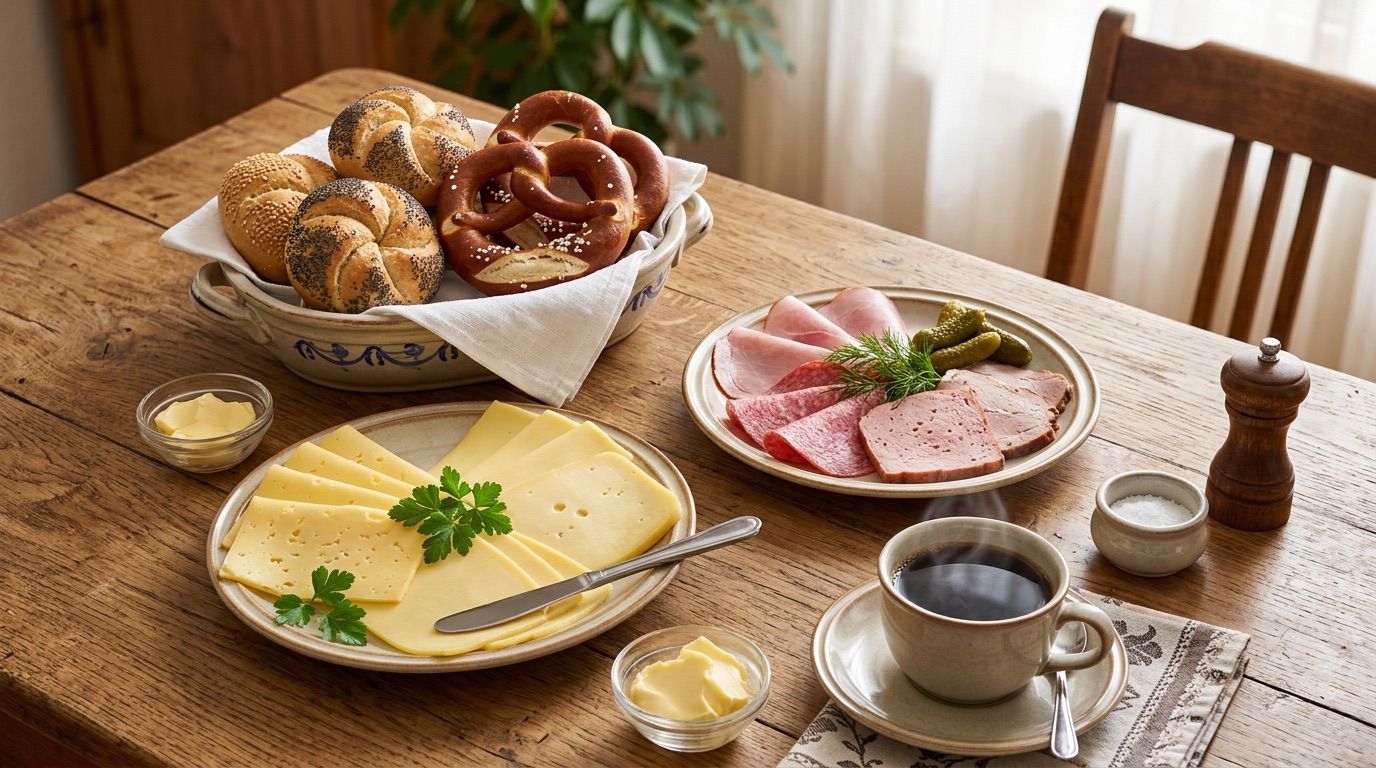
Food is the vocabulary you use most
You shop and eat every day, so food words repay learning faster than almost any other category. Learn a handful before your next trip to the Supermarkt and you will use them within the hour.
Here are the essentials, with their articles, grouped the way they sit on the shelves.
Fruit and vegetables
- der Apfel — apple
- die Banane — banana
- die Tomate — tomato
- die Karotte — carrot
- die Kartoffel — potato
- die Zwiebel — onion
- der Salat — lettuce/salad
- die Blaubeere — blueberry
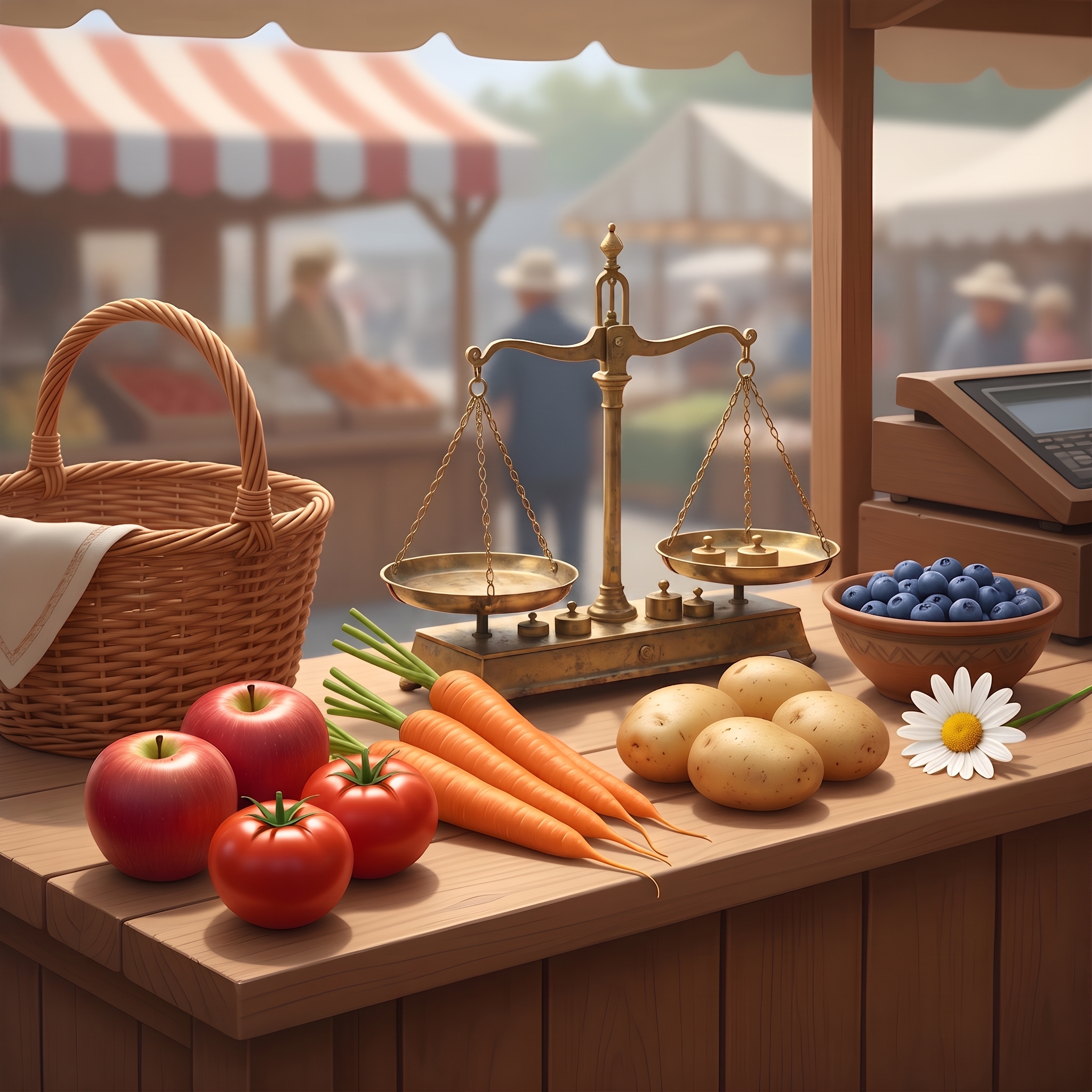
In DeutschSpeak you tap fruit and vegetables in a real market scene, hear each German word with its article, then find and say them back. market · der Markt
Explore Picture Scenes →
Staples and the fridge
- das Brot — bread
- die Milch — milk
- der Käse — cheese
- die Butter — butter
- das Ei — egg
- der Kaffee — coffee
- das Wasser — water
- das Fleisch — meat
Useful phrases at the shop
- Wie viel kostet das? — How much is this?
- Wo ist...? — Where is...?
- Kann ich ... haben? — May I have...?
- Nein, danke. — No thank you.
- Danke. — Thank you.
Remember them where you will use them
Attach each word to the place you meet it — the market stall, the fridge shelf, the plate. That is why a market scene beats a market word list: your memory of "die Karotte" comes back the moment you see carrots, exactly when you need it.
Practise food words in a German market
DeutschSpeak's market, grocery and produce scenes teach food vocabulary the way you meet it in real life. Free to start.
Frequently asked questions
How do you say food in German?
Food is das Essen (also das Lebensmittel for groceries). "I'm hungry" is Ich habe Hunger, and "Enjoy your meal" is Guten Appetit.
How do I ask for the price in German?
Say Wie viel kostet das? (How much is this?). Answers come in euros, so brushing up your German numbers helps.
Is German food vocabulary hard?
Not really — many food words are close to English (Apfel/apple, Milch/milk, Wasser/water), and they repeat constantly in daily life, making them some of the easiest German words to start with.